REEM™ 9220
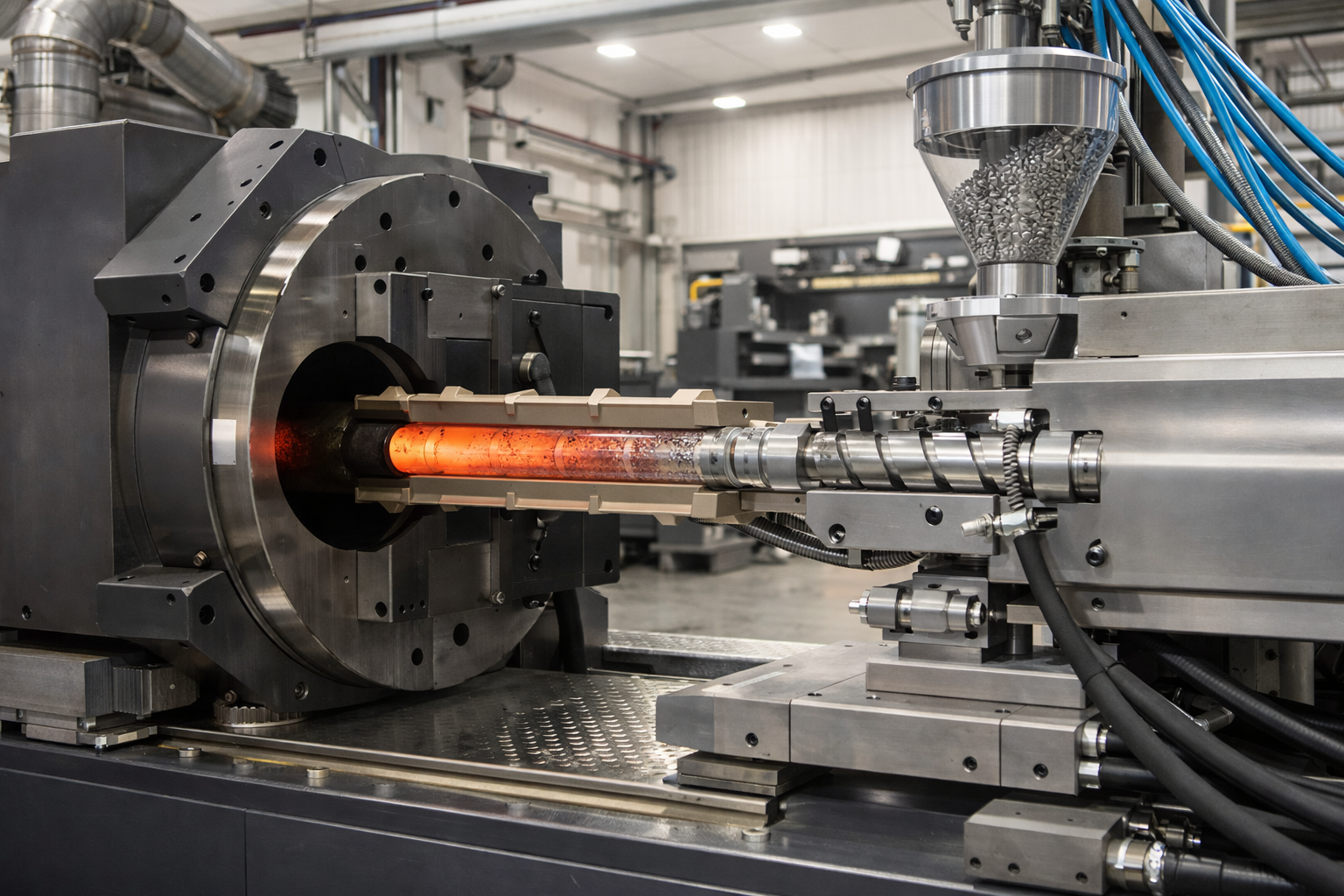
REEM™ 9220 exemplifies the next generation of magnesium alloy technology, designed to balance manufacturability with high‑performance structural integrity. Its rare‑earth‑optimized composition enables compatibility across nearly every major metal‑forming process—from casting and extrusion to powder metallurgy and metal injection molding—making it remarkably versatile for industrial production. The alloy’s microstructure benefits from RE‑assisted nucleation and recrystallization, which refine grain size and improve oxide stability, resulting in superior flame resistance and corrosion protection. This combination of metallurgical control and process flexibility allows REEM™ 9220 to deliver consistent mechanical properties even under demanding thermal and mechanical conditions. In terms of performance, REEM™ 9220 achieves a density of 1.84 g/cm³, offering a lightweight alternative to traditional aluminum alloys while maintaining structural strength. Its tensile strength of 290–310 MPa and yield strength of 170–200 MPa provide reliable load‑bearing capability, complemented by a fatigue strength of 90–105 MPa for durability under cyclic stress. The alloy’s ignition temperature of 560–600 °C enhances safety in high‑heat environments, making it suitable for aerospace, defense, automotive, and energy applications. Altogether, REEM™ 9220 stands out as a robust, flame‑resistant material that merges manufacturability with advanced performance for next‑generation engineering systems.
ALLOY Structure
REEM™ 9220 is a magnesium‑rich alloy that exemplifies how rare‑earth (RE) optimization can transform microstructural control and mechanical performance. Built around an α‑Mg matrix, it incorporates secondary phases such as Mg‑Al, Al‑RE, Mg‑Ca, and Mg‑RE compounds that strengthen the alloy through solid‑solution and precipitation mechanisms. In its as‑cast state, the grain size ranges from approximately 8 to 80 µm, refined by RE‑Ca‑assisted nucleation that promotes uniform grain formation and suppresses coarse dendritic growth. This fine microstructure enhances both strength and thermal stability, while the RE‑Ca additions improve oxidation resistance and flame retardancy—key attributes for magnesium‑based systems operating under elevated temperatures. During hot extrusion, REEM™ 9220’s RE‑Ca chemistry plays a crucial role in dynamic recrystallization (DRX). These additions lower the activation energy for DRX onset, enabling early and uniform recrystallization throughout the matrix. The result is a fine, equiaxed grain structure with strong grain‑boundary pinning that resists coarsening under thermal and mechanical stress. This microstructural refinement not only improves ductility and fatigue resistance but also ensures consistent mechanical behavior across complex geometries. Altogether, REEM™ 9220 demonstrates how precise alloying and thermomechanical processing can yield a magnesium system that balances manufacturability, strength, and stability for advanced structural applications.
-
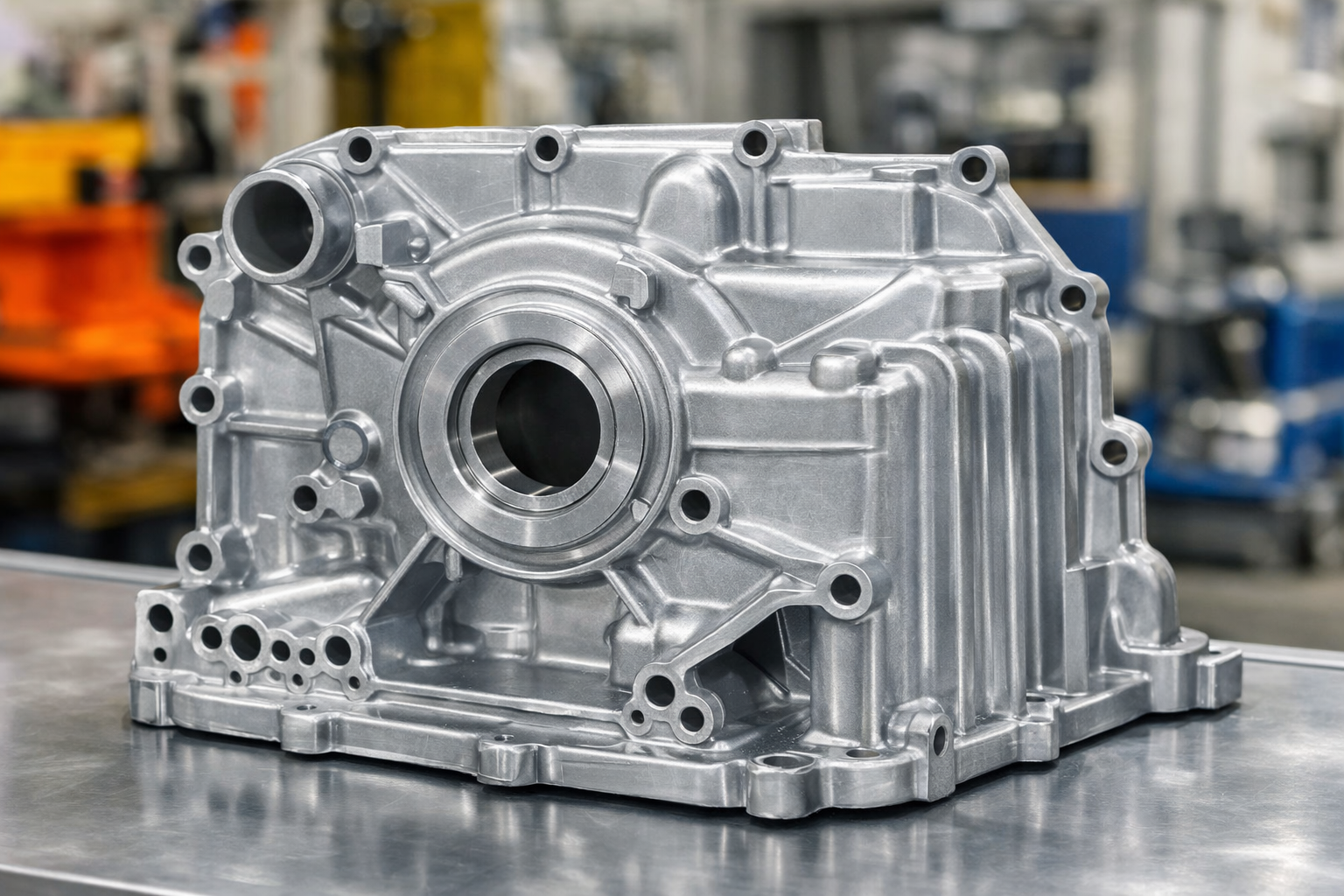
REEM™ 9220 demonstrates castability and high suitability for metal injection molding. RE-Ca additions promote fine grains and improved mechanical properties relative to traditional magnesium casting and injection molding. Propensity for hot cracking is substantially minimized, enabling complex structures with rapid cycle times and high throughput.
-
REEM™ 9220 responds well to aging to reach peak strength. Tailored aging schedules balance strength, UTS, and ductility, supporting optimized mechanical properties.
-
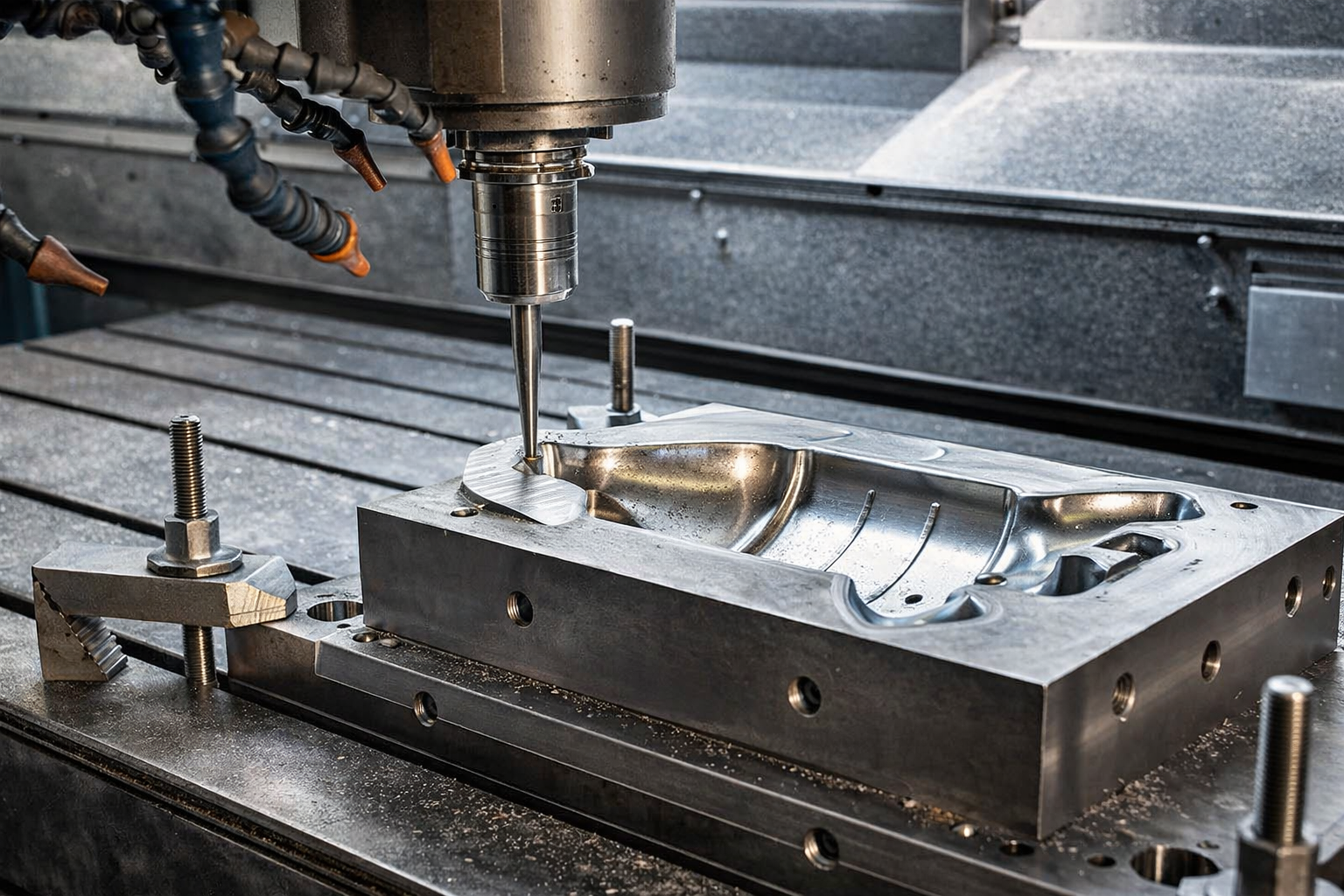
REEM™ 9220 machines cleanly with conventional tooling. The alloy’s inherent lattice structure supports tight tolerances and consistent surface finishes across turning, milling, drilling, and threading with feeds and speeds that drastically exceed modern aluminum machining. Standard coolant and chip‑control practices are sufficient, while post‑machining stress‑relief or peening is typically not required and thermal warpage in micron-tolerance components is nearly nonexistent.
-
Weldability is limited and requires compatible filler metals and appropriate shielding gas to preserve oxidation resistance. Pre‑weld cleaning and controlled heat input reduce defect formation and microstructural softening adjacent to the fusion zone. Where practical, designers should prefer mechanical joining or weld‑free architectures; if welding is essential, procedure qualification is recommended.
-
REEM™ 9220 is compatible with anodizing, electrophoretic coatings, conversion coatings, and metal plating to enhance corrosion resistance and wear durability. Anodizing improves surface hardness and corrosion resistance; e‑coats offer uniform coverage on complex geometries; conversion coatings promote paint/adhesive bond strength; and nickel, copper, zinc, tin, or chrome plating provides additional wear and corrosion protection. In marine or galvanically aggressive environments, coatings and isolation strategies are recommended to manage corrosion risk.
UAV Fuselage for Drone Application
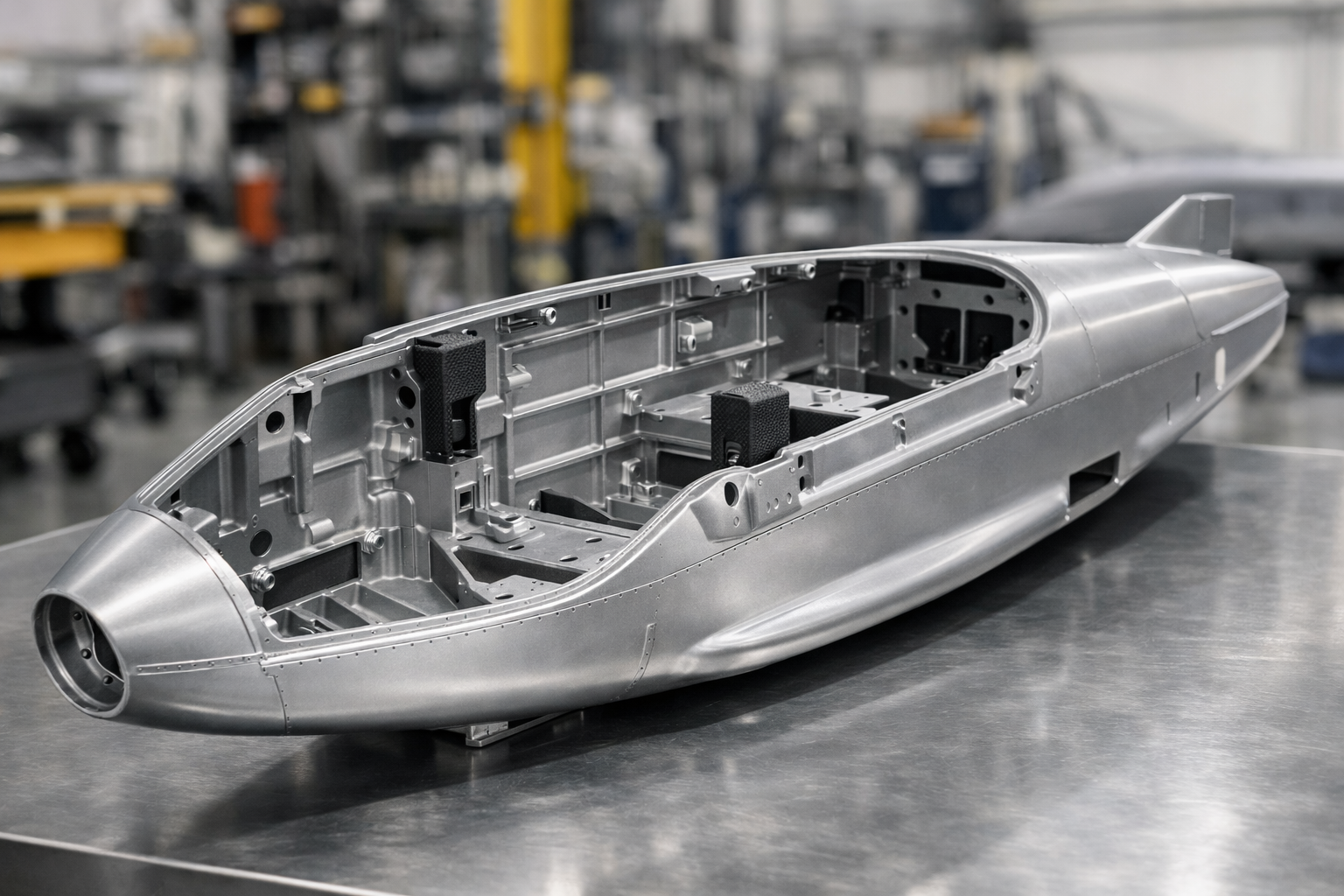
A large injection‑molded fuselage tub is an ideal airframe application for REEM™ 9220, taking advantage of the alloy’s ability to form complex, thin‑wall geometries while maintaining structural rigidity and low mass. In a medium‑to‑large UAV, the fuselage tub serves as the central structural shell that carries the battery bay, avionics, payload interfaces, and motor‑arm attachment points. REEM™ 9220’s rare‑earth–refined microstructure supports the creation of a single monolithic body with integrated ribs, shelves, and mounting bosses, eliminating the multi‑piece assemblies and fastener lines that typically reduce stiffness and add weight. The alloy’s mechanical profile—~290–310 MPa tensile strength, ~170–200 MPa yield strength, and ~90–105 MPa fatigue strength—provides ample margin for flight loads, while its 1.84 g/cm³ density keeps the airframe exceptionally light. The improved oxide stability and ~560–600 °C ignition temperature enhance safety for drones with high‑power electronics or externally mounted battery packs. By injection molding the fuselage as one consolidated structure, manufacturers gain high dimensional stability, reduced assembly time, and consistent repeatability at scale, while still retaining the option to CNC‑finish critical interfaces for bearings, payload rails, or arm sockets. This combination of manufacturability, stiffness, fatigue resistance, and thermal robustness makes REEM™ 9220 a compelling material for large UAV fuselage structures where endurance, payload stability, and production efficiency directly influence mission performance.
Central Hull for Marine Drone Application

A strong marine‑drone application for REEM™ 9220 is a large, injection‑molded central hull pod for an autonomous surface or subsurface‑skimming drone, where the structure must combine low mass, corrosion‑resistant stability, and the ability to integrate complex internal features without multi‑piece assembly. REEM™ 9220’s rare‑earth–refined microstructure and excellent moldability allow the hull to be produced as a single monolithic shell with thin‑wall sections, internal ribbing, and molded‑in mounting points for propulsion modules, battery trays, buoyancy chambers, and sensor arrays. The alloy’s mechanical profile—~290–310 MPa tensile strength, ~170–200 MPa yield strength, and ~90–105 MPa fatigue strength—supports continuous wave‑induced vibration and cyclic bending loads, while its 1.84 g/cm³ density keeps the craft exceptionally light for rapid maneuvering and long‑range missions. The improved oxide stability and RE‑stabilized surface film slow galvanic activity in saltwater environments, and the ~560–600 °C ignition temperature provides additional safety for drones carrying high‑power electronics or thermal‑cycling propulsion systems. By injection molding the hull as a single consolidated component, manufacturers reduce part count, eliminate leak‑prone seams, and achieve consistent dimensional accuracy across large surfaces, while still retaining the option to CNC‑finish critical interfaces for thruster mounts, sensor windows, or docking hardware. This combination of manufacturability, corrosion resistance, stiffness, and fatigue durability makes REEM™ 9220 an excellent choice for large marine‑drone hull structures where hydrodynamic stability, payload protection, and long‑term reliability directly influence mission performance.
Mission-Electronics Chassis for Unmanned Defense Platforms
A compelling defense‑oriented application for REEM™ 9220 is a large, injection‑molded mission‑electronics chassis for small to medium unmanned defense platforms, where structural rigidity, thermal stability, and integrated feature density directly influence mission reliability. REEM™ 9220’s ability to be die‑cast or injection‑molded into a single monolithic shell allows the chassis to incorporate internal ribbing, shock‑isolated electronics bays, antenna mounts, cooling channels, and hard‑mount points for navigation, communication, and targeting modules without relying on multi‑piece assemblies. The alloy’s mechanical profile—~290–310 MPa tensile strength, ~170–200 MPa yield strength, and ~90–105 MPa fatigue strength—supports continuous vibration from propulsion systems, rapid maneuvering, and repeated launch‑and‑recovery cycles. Its 1.84 g/cm³ density keeps the structure exceptionally light, enabling greater payload capacity or extended endurance for ISR, EW, or perimeter‑security drones. Rare‑earth–stabilized oxide films reduce galvanic activity and improve environmental durability, allowing the chassis to withstand maritime spray, desert dust, and thermal cycling from onboard processors or power systems. The elevated ignition temperature of ~560–600 °C adds a safety margin for platforms carrying high‑power radios, directed‑energy sensors, or hot‑running propulsion units. By molding the chassis as a single consolidated component, defense manufacturers reduce assembly time, eliminate fastener‑driven failure points, and achieve consistent dimensional accuracy for sensitive optical, RF, or inertial components. This combination of manufacturability, stiffness, thermal robustness, and environmental stability makes REEM™ 9220 well‑suited for next‑generation defense UAVs where mission uptime, sensor precision, and ruggedization are critical.
Sensor Module for Defense Vehicles
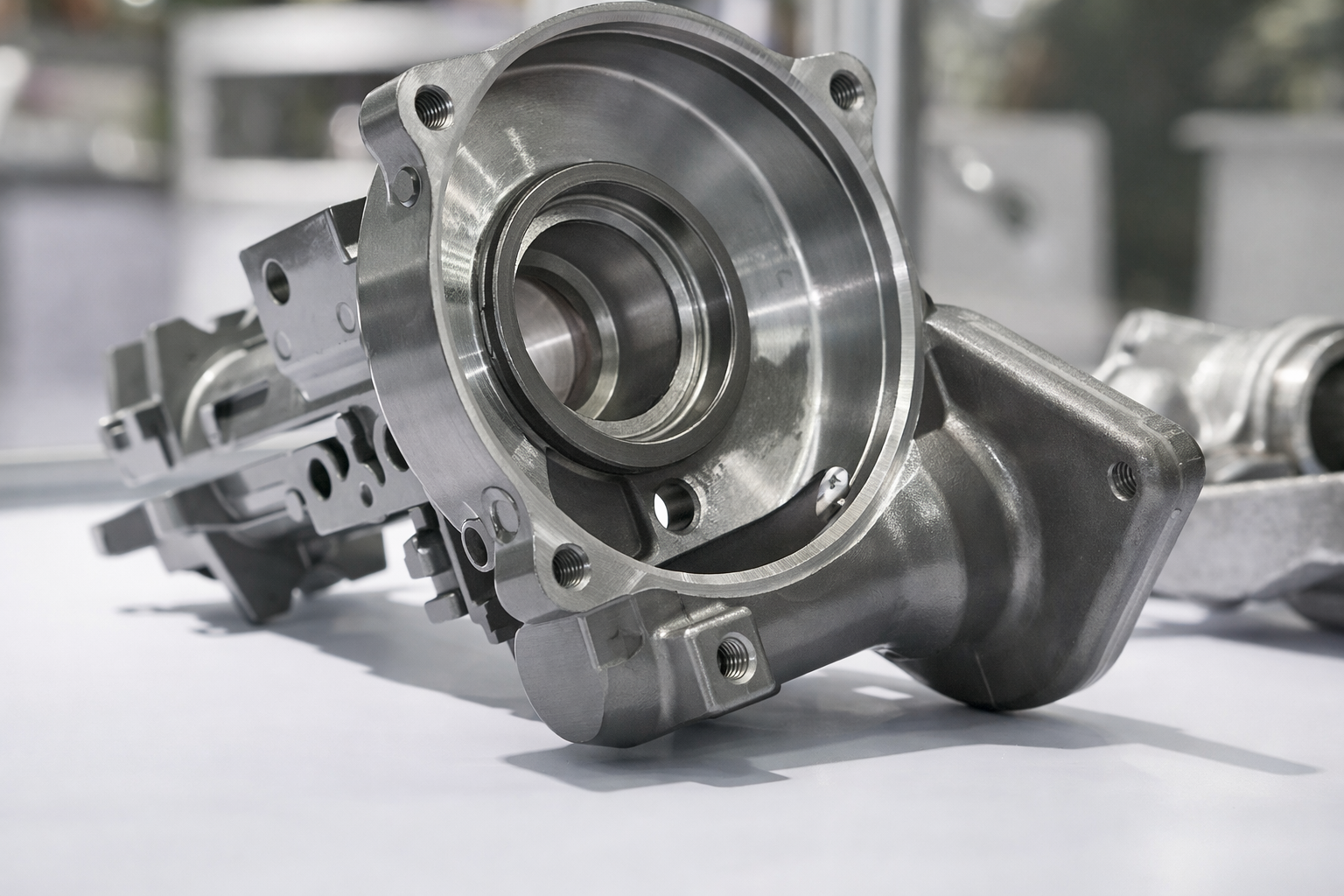
A lightweight, injection‑molded REEM™ 9220 front‑end electronics and sensor module can replace traditional multi‑piece metal assemblies on defense vehicles by forming a single, stiff, corrosion‑resistant housing that integrates cooling channels, shock‑isolated electronics bays, cable routing, and precision sensor mounts into one consolidated structure. By molding the module as a monolithic component, the vehicle gains a stronger and more dimensionally stable platform for radar, EO/IR optics, LIDAR, and communication hardware, while eliminating weld seams and fastener lines that typically introduce vibration, alignment drift, and long‑term fatigue issues. REEM™ 9220’s mechanical profile—high tensile and yield strength, strong fatigue resistance, and a rare‑earth–stabilized oxide layer—allows the module to withstand continuous off‑road shock loads, thermal cycling from high‑power electronics, and harsh environmental exposure ranging from desert dust to maritime spray. Its low density reduces front‑end mass, improving suspension response, acceleration, and battery efficiency in both manned and unmanned ground vehicles. Combined with excellent machinability for finishing critical interfaces, the alloy enables a rugged, lightweight, and highly integrated front‑end module that enhances sensor performance, simplifies assembly, and improves long‑term reliability in demanding defense environments.